
Pack Smart, Travel Safe: Medical Equipment Tips for Holiday Trips
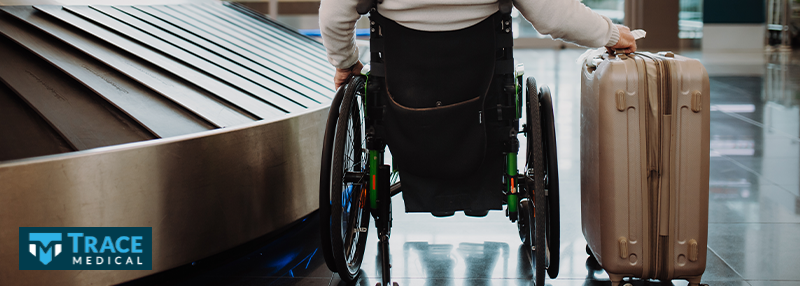
Man in a wheelchair pushing luggage in an airport
The holidays are a time to connect with family, enjoy festive traditions, and take a well-deserved break. But for patients who rely on medical equipment, like ventilators, oxygen concentrators, CPAPs, or nebulizers, traveling during this busy season can introduce unique challenges.
Whether a patient is heading out for a road trip or flying across the country, planning ahead is essential for safety, comfort, and peace of mind.
As a leading ventilator rental partner for home medical equipment (HME) providers and healthcare facilities, Trace Medical supports providers and care teams with travel-ready equipment and reliable service. Here’s a helpful checklist you can share with your patients or staff to help ensure smooth holiday travel.
1. Start with a Travel Checklist
Before any bags are packed, travelers should make a detailed inventory of all medical supplies and equipment needed during the trip. Depending on the care plan, this may include:
· Ventilators or portable oxygen concentrators
· CPAP or BiPAP machines
· Nebulizers or suction devices
· Mobility aids (e.g., wheelchairs, walkers)
· Extra batteries, chargers, or power cords
· Medications and disposables
Patients should verify what’s provided by their durable medical equipment (DME) supplier and ask about travel kits, power adapters, or lightweight device options that make transport easier.
2. Coordinate with the DME Provider Early
If medical equipment is being rented or serviced through a DME provider, patients should contact them at least 2–3 weeks before departure to:
· Confirm devices are travel-compatible (especially ventilators and concentrators)
· Schedule a maintenance check-up if needed
· Request copies of prescriptions and equipment documentation
· Ask about travel bags or protective cases
Providers can also help explain what to expect during air travel, especially for patients unfamiliar with airline or TSA guidelines.
3. Know Airline and TSA Regulations
For those flying, understanding air travel regulations can prevent frustrating delays or denied boarding. Most major airlines and the TSA allow medically necessary devices to be carried on free of charge, but it’s important to:
· Notify the airline in advance of any equipment (especially if oxygen is required)
· Carry documentation from the prescribing physician and DME provider
· Label devices clearly with the patient’s name and contact information
· Arrive early to allow time for additional screening
Patients using battery-powered ventilators or oxygen concentrators should check that devices comply with FAA regulations and have enough backup power for extended layovers or delays.
4. Pack for Power and Portability
Winter travel often includes long car rides, inclement weather, or unpredictable power access. To stay prepared, encourage patients to:
· Bring extra charged batteries and power cords
· Pack universal adapters if traveling internationally
· Ask about car charging options or DC converters
· Avoid relying solely on public outlets (especially in crowded terminals)
If possible, all critical equipment should be packed in carry-on luggage, not checked bags.
5. Protect Equipment During Transit
Medical equipment can be sensitive and expensive. Damaged devices not only create headaches but can disrupt care. To protect equipment:
· Use hard-shell or padded carrying cases
· Avoid stacking luggage on top of devices
· Never check essential items like ventilators or oxygen concentrators
· Store equipment upright and in climate-safe areas
· Label everything with your name and contact info
If a travel-specific case is recommended by the manufacturer, patients should obtain it from their DME provider or clinical team, who can offer guidance based on the specific model in use.
6. Have a Backup Plan for Emergencies
Even the best-laid plans can hit turbulence. Before leaving home, patients should be encouraged to:
· Carry a printed list of emergency contacts and prescriptions
· Know the location of nearby urgent care centers at their destination
· Pack a brief summary of their medical history and care needs
· Ask their provider what to do if equipment malfunctions mid-trip
For equipment rented through Trace Medical, emergency support is available 24/7 through their provider partners to help resolve travel-related issues fast.
7. Encourage Open Communication
Caregivers, family members, and travel companions should be looped in about the equipment and care routine. That includes knowing how to:
· Identify warning signs if something goes wrong
· Help with basic equipment setup or troubleshooting
· Handle devices safely during the trip
A little preparation on the front end goes a long way toward avoiding last-minute panic during holiday festivities.
Travel Confidently with the Right Support
The holidays should be a time of joy, not stress over logistics. When patients and caregivers are equipped with the right tools and support, they can travel confidently and focus on what matters most: making memories with loved ones.
As the nation’s leading ventilator rental partner, Trace Medical supports HME providers and care teams with high-quality, travel-ready respiratory equipment, dependable logistics, and peace-of-mind service, so patients can live life uninterrupted.
Need help coordinating patient equipment ahead of the holidays?
Trace Medical offers responsive support, maintenance checks, and durable travel solutions through your trusted DME partner network.