
Biomedical Vendor SLA Scorecard: 10 Reliability Metrics
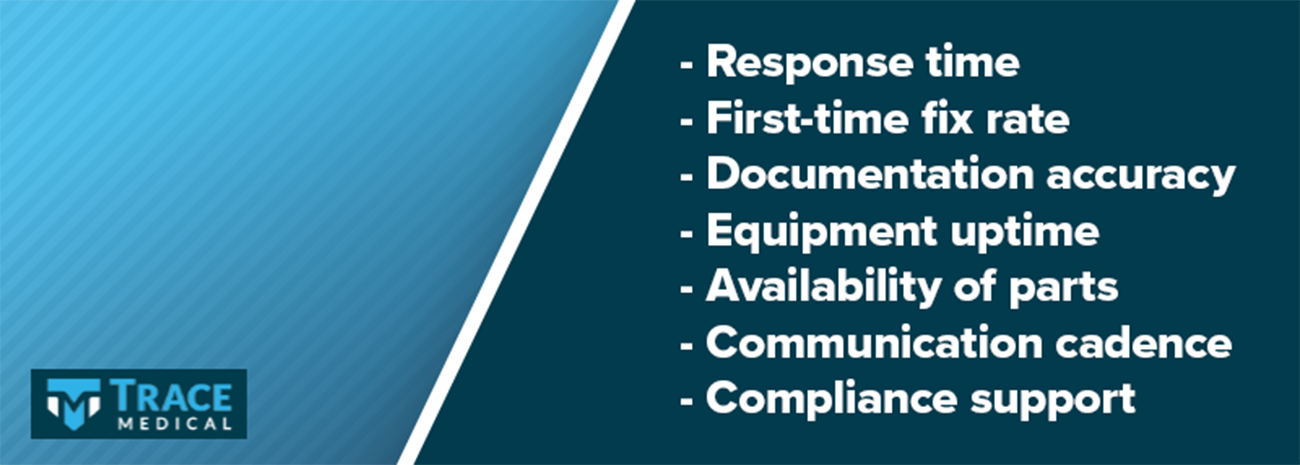
The value of a biomedical service partner often becomes clear during ordinary pressure points: a device is down, preventative maintenance is coming due, a service record is needed before an audit, or a clinical team needs a clear answer on equipment status. In those moments, broad promises in a contract matter less than how consistently the partner performs.
For healthcare providers, hospitals, post-acute facilities, hospice organizations, dialysis programs, HME/DME teams, and respiratory leaders, a biomedical service SLA can help turn expectations into measurable performance. It gives both sides a shared understanding of what reliable support should look like across maintenance, repairs, equipment uptime, documentation, communication, and escalation.
A biomedical service SLA should define response time, repair turnaround expectations, preventative maintenance requirements, documentation standards, communication cadence, escalation steps, compliance support and how performance will be measured over time.
At Trace Medical, we support providers that depend on equipment readiness across rented and owned fleets, including ventilators, dialysis equipment, and other high-value medical equipment. That experience has shown us that the strongest biomedical equipment service agreement is not always the longest contract. It is the one that makes service expectations clear enough to manage day to day.
Quick Navigation
Why SLA metrics matter
What a biomedical SLA should clarify
10 metrics to include in your scorecard
How to compare service partners
When to revisit your SLA
FAQs
Why Biomedical SLAs Matter More Than the Contract Language
A biomedical service agreement may define the business relationship, but daily performance determines whether the relationship works. If response expectations are vague, repair updates are inconsistent, or service records are difficult to retrieve, operations teams are left filling in the gaps.
That matters because medical equipment downtime affects more than the device itself. It can delay patient starts, complicate discharges, increase rental pressure, disrupt clinical workflows, and create administrative strain when documentation is incomplete. For high-acuity respiratory programs, dialysis programs, and organizations managing equipment across multiple sites, those issues can build quickly.
A medical equipment maintenance SLA gives teams a practical way to evaluate reliability over time. Instead of relying on general statements about service quality, providers can review measurable performance: how quickly issues are acknowledged, how long repairs take, whether PMs are completed on schedule, and how consistently documentation is returned.
The goal is not to create an overly rigid process, but to reduce uncertainty. When providers know what to expect, and when the biomedical service provider knows how performance will be reviewed, it becomes easier to manage service quality before small gaps become larger operational problems.
What a Biomedical Service SLA Should Clarify
A useful biomedical service SLA should start with scope. Providers should know which equipment is covered, which locations are included, what service activities are part of the agreement, and where responsibilities shift between the internal team and the outside partner.
That scope should include clear expectations for response windows. A provider may need different response standards for ventilators, dialysis equipment, stockpiled assets, or lower-acuity equipment. The SLA should explain how urgent issues are identified and how service priorities are assigned.
Repair turnaround also needs definition. Some repairs depend on parts availability, manufacturer support, shipping timelines, or the complexity of the issue. Even so, a service agreement should clarify how turnaround is tracked, how delays are communicated, and what happens when equipment cannot be returned within the expected window.
Preventative maintenance compliance should be addressed directly. This includes PM schedules, testing requirements, calibration needs, service intervals, documentation, and how upcoming maintenance is communicated. For owned devices, rented equipment, and stockpiled assets, a missed or delayed PM can create downstream readiness and compliance concerns.
Documentation standards should also be included. Providers should know what records will be provided, how service history is maintained, how quickly documents can be accessed, and whether records are tied to the device rather than scattered across emails or spreadsheets.
Finally, the SLA should define communication and escalation. Who receives updates? When should an issue move beyond the normal support channel? What information should be included when a problem is escalated? These details often determine whether an issue feels controlled or chaotic.
For providers still defining their biomedical approach, our article on getting started with biomedical services may help frame what to assess before building or outsourcing support.
10 Metrics That Predict Biomedical Partner Reliability
A biomedical vendor scorecard does not need to be complicated to be useful. These 10 biomedical maintenance metrics can help providers compare partners, review current performance, and identify service gaps before they affect equipment readiness.
1. Response Time
Response time measures how quickly the partner acknowledges a service request and begins the support process. This is especially important when a device is needed for active patient care or when an equipment issue affects scheduling, discharge coordination, or fleet availability.
Providers should ask how response time is defined. Does the clock start when the ticket is submitted, when a device is received, or when a technician reviews the request? The answer matters because different definitions can make performance look better or worse than it feels operationally.
Questions to ask during evaluation:
What response window applies to urgent service requests?
Are different response standards used for high-acuity equipment?
How are after-hours or weekend requests handled?
Who confirms that the request has been received?
2. Repair Turnaround Time
Equipment repair turnaround time measures how long it takes to complete repairs and return equipment to usable status. For providers managing ventilators, dialysis equipment, or regional fleets, turnaround time affects backup inventory, rental needs, and patient readiness.
A strong SLA should separate routine repairs from complex repairs that require parts, manufacturer review, or additional testing. It should also explain how delays are communicated. A delayed repair is easier to manage when operations teams receive timely, specific updates.
During vendor review, ask what happens when a repair cannot be completed within the expected window. The answer should include communication steps, documentation expectations, and options for temporary equipment support when applicable.
3. Preventative Maintenance Completion Rate
Preventative maintenance compliance measures whether required maintenance is completed on schedule. This metric is one of the clearest indicators of whether a biomedical partner is helping the provider stay ahead of equipment risk.
PM completion matters because service delays can affect patient-ready status, audit readiness, and internal confidence in the fleet. For equipment that moves between locations or care settings, it also helps teams avoid uncertainty about which devices are available for deployment.
Providers should ask how PM schedules are tracked, how upcoming maintenance is communicated, and whether the partner provides reporting that shows completed, upcoming, and overdue work.
4. First-Time Fix Rate
First-time fix rate measures how often an issue is resolved during the first repair attempt or service cycle. A high first-time fix rate can reduce repeat shipments, repeat tickets, staff follow-up, and extended downtime.
This metric is useful because repair completion alone does not always tell the full story. If a device returns from service and fails again quickly, the provider still has an operational problem. A biomedical service provider should be able to explain how repeat issues are documented and reviewed.
Providers may want to ask whether the vendor tracks recurring failures by device, model, location, or issue type. That visibility can help identify patterns that affect fleet planning.
5. Documentation Accuracy
Documentation accuracy measures whether service records are complete, clear, and tied to the correct equipment. For biomedical leaders and compliance teams, this is one of the most important parts of a medical equipment service partner relationship.
Accurate documentation should show what work was performed, when it was completed, who completed it, what parts or tests were involved, and whether the device is cleared for use. Records should be accessible when needed for audits, accreditation, internal reviews, reimbursement support, or quality checks.
Providers should ask to see sample documentation before signing or renewing an agreement. The format, level of detail, and retrieval process will tell you a lot about how the relationship will function when documentation is needed quickly.
6. Equipment Uptime
Medical equipment uptime measures how consistently equipment remains available and ready for use. This can be tracked at the device, fleet, location, or program level depending on how the provider manages equipment.
Uptime is affected by many factors, including repair speed, PM planning, parts availability, equipment age, service documentation, and inventory visibility. That makes it a useful outcome metric, not just a technical one.
For providers with rotating fleets, ask whether the partner can help identify downtime trends. If certain models, device categories, or locations show repeated service issues, the data may support better purchasing, rental, or replacement decisions.
7. Parts Availability
Parts availability measures whether the biomedical partner can access the components needed to complete repairs efficiently. Even a responsive service team may struggle if parts are frequently delayed or unavailable.
This metric should be discussed honestly. Some parts may depend on manufacturer availability or supply chain timing. The important question is how the partner anticipates, communicates, and manages those constraints.
Providers should ask:
Which parts are commonly stocked?
How are backordered parts communicated?
Are substitute devices or rental options available when repairs are delayed?
How does the partner help forecast recurring parts needs?
8. Communication Cadence
Communication cadence measures how consistently the provider receives updates about open repairs, PM schedules, service delays, equipment status, and unresolved issues.
This does not mean every update needs to be long. In many cases, a brief status note is enough. What matters is that operations teams are not forced to chase answers across multiple contacts.
A practical SLA should clarify when updates are sent, who receives them, and what information is included. For larger organizations, communication may need to vary by stakeholder. A biomedical leader may need service detail, while an operations director may need a fleet readiness summary.
9. Compliance Support
Compliance support measures how well the partner helps the provider maintain audit-ready records, service histories, PM documentation, and equipment status visibility.
Biomedical services outsourcing is often evaluated through cost and turnaround time, but compliance support can be just as important. Incomplete documentation or inconsistent records can create stress during surveys, audits, payer reviews, or internal quality checks.
Providers should ask how long records are retained, how they are organized, how quickly they can be produced, and whether reporting can be filtered by device, location, date, service type, or status.
If your team is thinking more broadly about equipment readiness, our stockpile management program shows how maintenance, documentation, staging, and redeployment planning can support asset availability over time.
10. Escalation Performance
Escalation performance measures how well the partner handles issues that move beyond standard service activity. These may include delayed repairs, repeated failures, missing documentation, urgent equipment needs, or questions involving clinical, operational, or compliance stakeholders.
A good escalation process should be easy to understand before it is needed. Providers should know who to contact, when to escalate, what information to include, and how the partner will communicate next steps.
During vendor evaluation, ask for a real-world example of how an escalated service issue would be managed. The answer should show ownership, not handoffs that leave the provider responsible for coordinating the fix.
How to Use a Vendor Scorecard Without Overcomplicating It
A biomedical vendor scorecard works best when it is simple enough to use consistently. Providers do not need a complex dashboard to start measuring reliability. A quarterly scorecard with clear categories, a basic rating scale, and space for comments can produce useful conversations.
For example, teams might rate each metric from 1 to 5, then add notes on recent service issues, documentation concerns, unresolved tickets, or improvements since the last review. Over time, the scorecard can support RFPs, vendor comparisons, contract renewals, and internal planning discussions.
The most useful scorecards combine numbers with operational context. A partner may meet average repair turnaround expectations but still cause frustration if updates are unclear. Another partner may have occasional delays but communicate well, document thoroughly, and provide practical next steps. The scorecard should make those differences visible.
Providers can also use the same framework when comparing in-house and outsourced support. If your team is evaluating long-term biomedical strategy, this article on biomedical planning and long-term equipment conversations offers additional considerations.
Red Flags to Watch for in Biomedical Service Agreements
Some biomedical service agreements look reasonable until teams try to use them during a real equipment issue. Watch for language that sounds broad but leaves important details undefined.
Common red flags include vague response windows, unclear repair turnaround expectations, limited documentation commitments, no defined PM reporting, or an escalation process that depends on informal contacts. Providers should also be cautious when agreements do not clarify who owns follow-up after a device is sent for repair.
Poor reporting is another warning sign. If a partner cannot show service history, PM status, open repair trends, or documentation quality in a usable format, it may be difficult to manage performance over time.
A strong medical equipment service partner should be willing to discuss expectations before the agreement is signed. That conversation should include service scope, communication preferences, reporting needs, and how performance will be reviewed.
Organizations can learn more about our broader equipment support through our services page or start a conversation through our inquiry page.
FAQs About Biomedical Service SLAs
What is a biomedical service SLA?
A biomedical service SLA is a service-level agreement that defines how biomedical support will be delivered and measured. It typically covers response time, repair turnaround, preventative maintenance, documentation, communication, escalation, reporting, and compliance support.
What metrics should be included in a biomedical vendor scorecard?
A biomedical vendor scorecard should include response time, repair turnaround time, preventative maintenance completion rate, first-time fix rate, documentation accuracy, equipment uptime, parts availability, communication cadence, compliance support, and escalation performance.
How do you measure biomedical service reliability?
Biomedical service reliability can be measured by tracking whether the partner meets agreed expectations over time. Useful indicators include timely responses, consistent repair turnaround, on-schedule PM completion, accurate documentation, strong uptime, clear communication, and effective escalation when issues arise.
Why does preventative maintenance completion matter?
Preventative maintenance completion matters because it helps keep equipment patient-ready, supports compliance expectations, and reduces the risk of avoidable downtime. It also gives operations teams better visibility into which devices are ready for use and which require attention.
What is a reasonable repair turnaround time for medical equipment?
A reasonable repair turnaround time depends on the equipment type, issue severity, parts availability, testing requirements, and whether manufacturer support is needed. Providers should define expected turnaround windows by equipment category and require timely updates when repairs fall outside those expectations.
When should providers review their biomedical service agreement?
Providers should review their biomedical service agreement at least annually and whenever equipment volume, device mix, locations, clinical programs, regulatory expectations, or service performance changes. Quarterly scorecard reviews can also help identify issues before renewal conversations.