
Planning Ventilator Capacity for Scalability
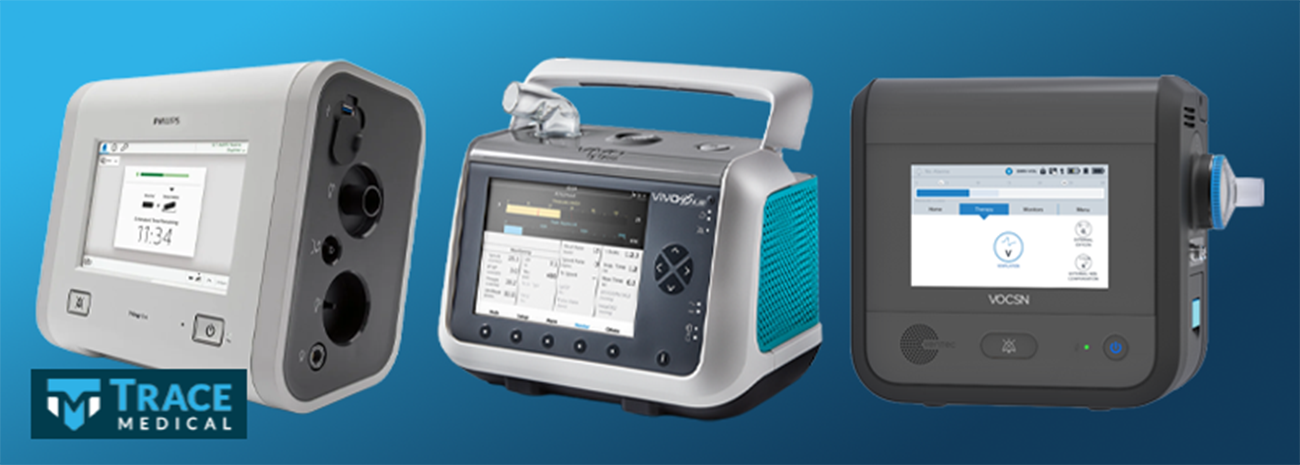
A ventilator fleet can look adequate on paper while operational gaps tell a different story. One branch may be short on equipment, several units may be undergoing service, or the available models may not match incoming patient needs.
For respiratory programs, capacity depends on more than the total number of ventilators in inventory. It means having patient-ready equipment in the right locations at the right time, supported by the people and processes needed to inspect, track, deliver, maintain, and redeploy each device.
Ventilator capacity planning is the process of determining how many patient-ready ventilators an organization needs, which models are required, where units should be positioned, and how the fleet can expand or contract as demand changes.
Quick Navigation
What Is Ventilator Capacity Planning?
Why Isn’t Ventilator Inventory the Same as Available Capacity?
What Factors Determine Ventilator Capacity?
How to Plan Ventilator Capacity
How to Build Scalability Without Overbuying
How Owned and Rented Ventilators Can Work Together
Metrics to Monitor as a Ventilator Program Grows
Common Ventilator Capacity Planning Mistakes
How Trace Medical Supports Scalable Ventilator Capacity
Frequently Asked Questions
What Is Ventilator Capacity Planning?
Ventilator capacity planning aligns changing equipment demand with actual fleet readiness. It considers patient census, referrals, device utilization, ventilator models, equipment locations, maintenance schedules, repair downtime, contingency needs, and access to rental inventory.
A useful planning framework is:
Planned capacity = baseline demand + expected growth + downtime allowance + contingency capacity
Each part serves a different purpose:
Baseline demand represents the patient-ready equipment needed to support normal census and referral activity.
Expected growth accounts for sustained changes such as new referral relationships, branch expansion, or program growth.
Downtime allowance accounts for ventilators temporarily unavailable because of inspection, maintenance, repair, cleaning, documentation, or other readiness requirements.
Contingency capacity covers demand above normal operating levels, including unexpected referrals, equipment failures, or other disruptions.
This isn’t a universal formula, and the components shouldn’t be treated as fixed percentages. Each organization must adjust its plan based on its patient population, geographic reach, device mix, operating model, equipment access, and tolerance for capacity risk.
Planning must also extend beyond equipment counts. A larger fleet only adds usable capacity when teams can locate, prepare, deliver, maintain, and support the devices effectively.
Why Isn’t Ventilator Inventory the Same as Available Capacity?
Inventory shows which ventilators an organization owns or manages. Available capacity shows which units can actually be deployed within the required timeline.
A ventilator may appear in inventory but remain unavailable because:
It’s undergoing maintenance or repair.
Required inspection or documentation is incomplete.
It’s located in another branch or service territory.
Its model or configuration doesn’t fit the current need.
Required accessories aren’t available.
Its location or readiness status is unclear.
Delivery or setup timing doesn’t align with the referral.
A device listed as available may still need cleaning, testing, documentation, configuration, or accessory checks before deployment.
Leaders need visibility into both total assets and patient-ready units by model and location. Without that distinction, capacity plans may overstate how much support the fleet can provide.
What Factors Determine Ventilator Capacity?
Current Patient Census and Utilization
Planning typically begins with current census, equipment utilization, and recent demand patterns.
Review how many ventilators are actively deployed, available, under service, awaiting inspection, or unaccounted for. Utilization should also be examined by model and location rather than only across the entire fleet.
Historical data can establish a baseline, but it shouldn’t be the only input. Recent referral changes, repair patterns, and local capacity pressures may reveal needs that older averages don’t reflect.
Referral Volume and Growth Expectations
Referral sources, contract changes, service-area expansion, and program development can all affect ventilator demand.
Leaders should distinguish between sustained growth and temporary variation. A new long-term referral relationship may justify a different capacity response than a brief increase in discharges or a one-time facility need.
Consider:
Recent referral volume
Accepted and declined referrals
Pending discharges
New referral relationships
Expected branch or territory growth
Device types requested
Timing from referral to setup
This helps connect ventilator planning with actual business development and patient-placement opportunities.
Seasonal and Unplanned Demand
Demand may fluctuate because of seasonal respiratory volume, hospital discharge patterns, facility overflow, localized emergencies, or unexpected changes in patient census.
Reviewing prior high-demand periods can help organizations identify when additional flexibility may be useful. However, one temporary increase shouldn’t automatically be treated as permanent growth.
For short-term and unpredictable demand, a surge-capacity strategy may be more appropriate than permanently expanding the owned fleet.
Related Reading: Building Surge Capacity Planning Without Overbuying
Device Mix and Product Standardization
Not every ventilator supports the same applications, settings, or patient needs. Capacity should therefore be evaluated by model and intended use instead of total fleet size alone.
Product standardization may simplify training, equipment management, accessory inventory, and service processes. At the same time, a fleet must retain enough flexibility to support the patient populations and care settings served by the organization.
Teams can review Trace Medical’s ventilator inventory when evaluating available models and future fleet needs. Trace Medical’s selection includes multiple products, including Trilogy, Trilogy Evo, VOCSN, Astral, LTV, Vivo, and LUISA models.
Preventive Maintenance and Repair Downtime
Scheduled maintenance and unexpected repairs reduce deployable capacity. Planning should account for service intervals, repair turnaround times, shipping requirements, and documentation workflows.
Related Reading: How Ventilator Downtime and Unplanned Equipment Gaps Impact Patient Outcomes and Staff Workflows
Geographic Distribution
A system may have enough ventilators overall while still facing shortages in individual service areas. Equipment location, transportation time, and branch-level demand all influence ventilator availability.
Staffing and Operational Support
More equipment does not automatically create more usable capacity. Teams must also be able to inspect, prepare, deliver, retrieve, and service additional units as the fleet grows.
Emergency and Contingency Planning
Contingency needs vary widely. Appropriate reserve capacity depends on demand volatility, geographic coverage, transportation timelines, and access to replacement equipment.
How to Plan Ventilator Capacity
1. Establish baseline demand. Review patient census, utilization trends, referral history, and patient-ready inventory.
2. Account for changing referrals and seasonal demand. Separate sustained growth from temporary fluctuations.
3. Identify the required device mix. Evaluate capacity by model, application, and standardization goals.
4. Include maintenance and repair downtime. Factor in service schedules, repair frequency, and turnaround times.
5. Review capacity by location. Compare local demand with available inventory.
6. Define contingency requirements. Consider equipment failures, emergency demand, and supply disruptions.
7. Determine the right mix of owned and rented equipment. Organizations evaluating different approaches may benefit from reviewing The True Cost of Ventilator Ownership alongside Renting vs. Buying Ventilators.
8. Track performance and revise the plan. Compare forecasts against actual demand and adjust as conditions change.
How to Build Scalability Without Overbuying
Growing programs often face a difficult balance. Buying too much equipment too soon can increase carrying costs, while underinvesting can create capacity gaps.
Many organizations address this challenge through phased growth, regular utilization reviews, stronger asset visibility, and access to supplemental inventory when needed.
Product standardization can support scalability by simplifying training and fleet management, but growth decisions should still be guided by actual demand patterns rather than short-term spikes.
A practical approach weighs the cost of excess inventory against the risk of inadequate capacity. We explore this topic further in Surge Capacity Planning Without Overbuying.
How Owned and Rented Ventilators Can Work Together
Ownership and rentals can serve different roles within one capacity plan.
Owned equipment may be appropriate for stable, consistently used baseline capacity. It gives the organization direct control of assets but also requires capital, maintenance, repairs, storage, tracking, and lifecycle management.
Rented equipment may help cover:
Temporary demand
Uncertain growth
Seasonal increases
New branch expansion
Pending patient discharges
Repair or maintenance downtime
Short-term model-specific needs
Unexpected equipment shortages
Trace Medical offers daily, monthly, and long-term rental options for facility customers. We also provide rental support for HME providers, facilities, transport organizations, hospice programs, and government customers.
Rentals may also give leaders time to evaluate whether higher demand is sustained before committing capital to additional owned equipment.
The right mix depends on the organization’s utilization, financial strategy, equipment requirements, geographic coverage, internal service capacity, and tolerance for risk.
Related Reading: Designing Ventilator Programs That Support Efficiency and Patient Outcomes
Metrics to Monitor as a Ventilator Program Grows
Helpful indicators include:
Patient-ready units by model and location
Utilization by model
Units unavailable for service
Repair turnaround time
Urgent branch-to-branch transfers
Rental usage patterns
Missing or unlocated assets
Forecast demand versus actual demand
These metrics can reveal emerging issues before they affect operations. Frequent transfers may point to geographic imbalances. Repeated rental usage may indicate sustained growth. Rising downtime may signal a maintenance bottleneck.
Capacity metrics should also help organizations evaluate how they are balancing patient needs with ventilator availability across service areas.
Read More: How RTs Balance Patient Needs with Ventilator Availability
Common Ventilator Capacity Planning Mistakes
One of the most common mistakes is relying on total fleet count without evaluating equipment readiness. Other issues include overlooking maintenance downtime, assuming every ventilator is interchangeable, or focusing only on systemwide inventory while ignoring branch-level demand.
Organizations sometimes purchase equipment based on short-term spikes and never reassess whether the additional inventory is still needed.
Capacity planning should be reviewed regularly. Changes in referral volume, service requirements, geography, or repair performance can quickly make an older plan less useful.
How Trace Medical Supports Scalable Ventilator Capacity
We help organizations respond to changing demand through nationwide ventilator rentals, inventory support, preventive maintenance resources, and broad ventilator availability. Our daily, monthly, and long-term rental options can complement owned inventory when additional capacity is needed.
As a national ventilator rental company, we support DME and HME providers, healthcare facilities, respiratory programs, hospice organizations, transport providers, and government customers. We also help organizations improve fleet visibility and maintain flexible capacity as operational needs change.
If you're evaluating future growth, addressing equipment gaps, or preparing for changing demand, contact our team.
Frequently Asked Questions About Ventilator Capacity Planning
What is ventilator capacity planning?
Ventilator capacity planning is the process of determining how many patient-ready ventilators an organization needs, which models are required, and where those devices should be located. It also accounts for demand changes, maintenance downtime, contingency needs, and fleet readiness.
What causes ventilator shortages?
Ventilator shortages may be caused by higher-than-expected referrals, clustered hospital discharges, seasonal demand, changing patient needs, preventive maintenance, repair delays, incomplete readiness steps, geographic imbalances, or a lack of the required model.
A fleet may have enough ventilators overall and still experience a shortage if the patient-ready equipment isn’t located where it’s needed.
How many backup ventilators should an organization keep?
There is no universal backup number. Appropriate contingency capacity depends on census levels, device mix, geographic coverage, transportation timelines, repair patterns, and access to rental inventory. Each organization should evaluate its own operational risks.
How does maintenance downtime affect ventilator capacity?
Maintenance downtime reduces patient-ready capacity. Even though a ventilator remains part of inventory, it cannot support demand while undergoing service, inspection, or repair. Capacity plans should account for these periods.
When should a healthcare organization rent instead of buy ventilators?
Renting may make sense when demand is temporary, uncertain, seasonal, or tied to expansion efforts. Rentals can also provide support during maintenance events or unexpected capacity shortages. Ownership may be appropriate for stable long-term demand.
How can ventilator rentals support surge capacity?
Rentals can provide temporary access to additional ventilators without permanently increasing the owned fleet.
They may help support discharge spikes, seasonal increases, facility overflow, repair backlogs, emergency response, expansion, or model-specific needs. Establishing rental triggers before capacity becomes constrained can help teams respond earlier.
How often should a ventilator capacity plan be reviewed?
Capacity plans should be reviewed regularly and whenever significant changes occur. Growth in referrals, market expansion, changes in utilization, recurring rentals, or longer repair timelines may warrant a reassessment.